RETROSPECT
A digital time capsule to capture memories with friends
Timeline
Timeline
Aug 2024 - Feb 2025
Aug 2024 - Feb 2025
Role
Role
Product designer
Product designer
Team
Team
1 product manager
2 product designers
4 developers
1 product manager
2 product designers
4 developers
skills
skills
Interaction design
Visual design
Prototyping
User testing
Interaction design
Visual design
Prototyping
User testing
Overview
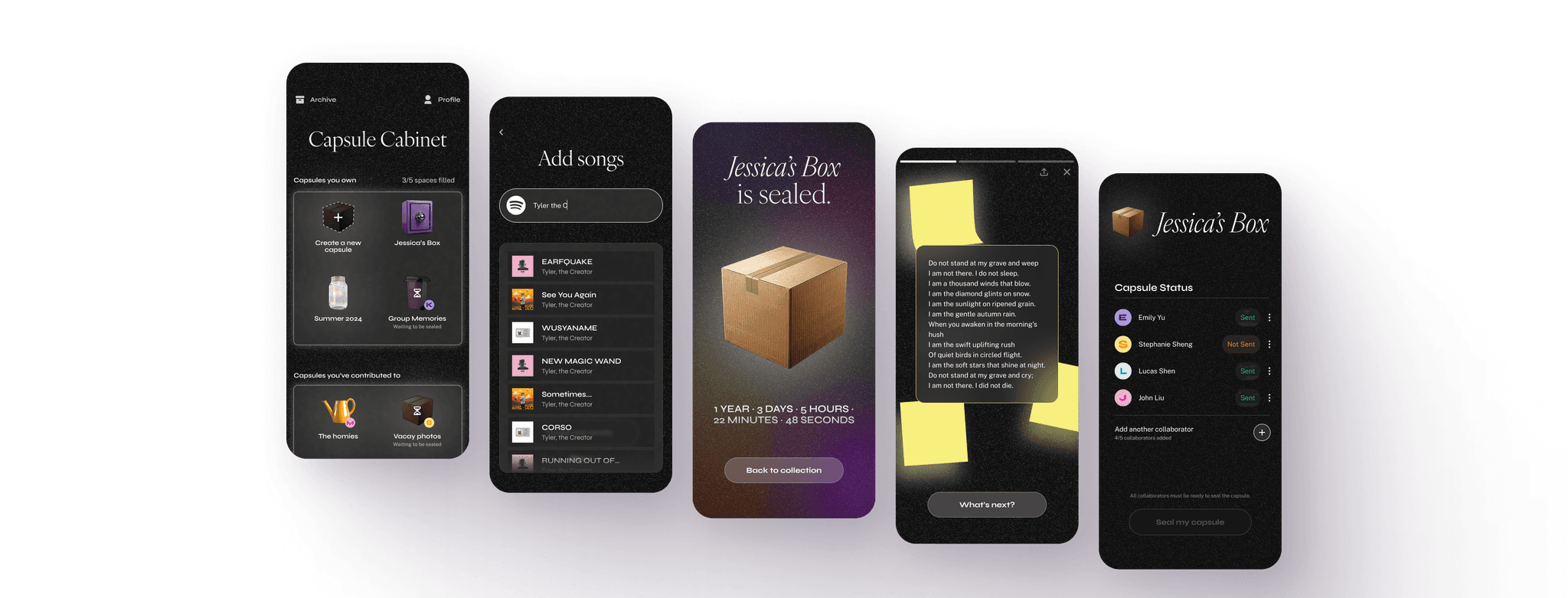
Retrospect is a social app for collaboratively creating and sharing digital time capsules with photos, songs, drawings, and more media.
As one of two product designers, I led the 0→1 design of the core experience.
inspiration
Niche social apps are on the rise.
Apps like BeReal, Lapse, Locket, and Airbuds focus on sharing moments through a single, niche purpose. In an age dominated by massive social platforms, users are drawn to these apps for their simplicity, novelty, and playful experiences.

With Retrospect, my team and I wanted to focus on two trends inspired by these existing apps:
Trend #1
Immersive, lighthearted mobile-first experiences
Trend #2
Personalized reflection designed for sharing
Research
After perusing the App Store and the internet, I discovered that Gen Z users are exploring smaller, more genuine spaces that make connecting feel real and fun.
App Store reviews for Lapse, BeReal, and Locket
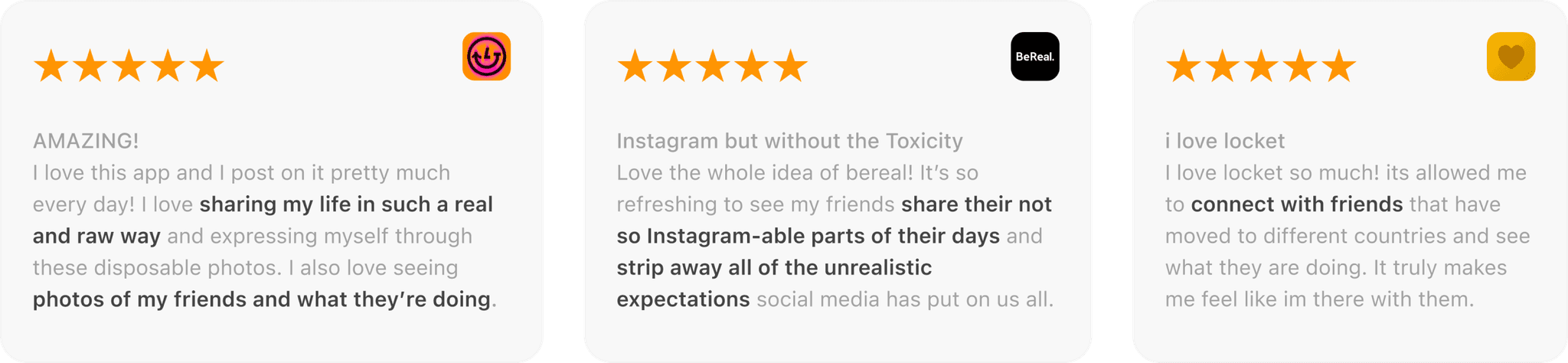
The team's research revealed two key findings about trends in the consumer app space:
1
People want apps that help them connect with friends in a real and relaxed way.
Apps like BeReal and Locket succeed because they prioritize authenticity over performance
2
Sharing is central to how users engage with niche social apps.
Platforms like BeReal and Spotify Wrapped integrate sharing into the core experience, which organically drives virality through word of mouth.
From these learnings, my team set on creating a digital time capsule that lets users create personalized and shared memories to open in the future.
Competitive analysis
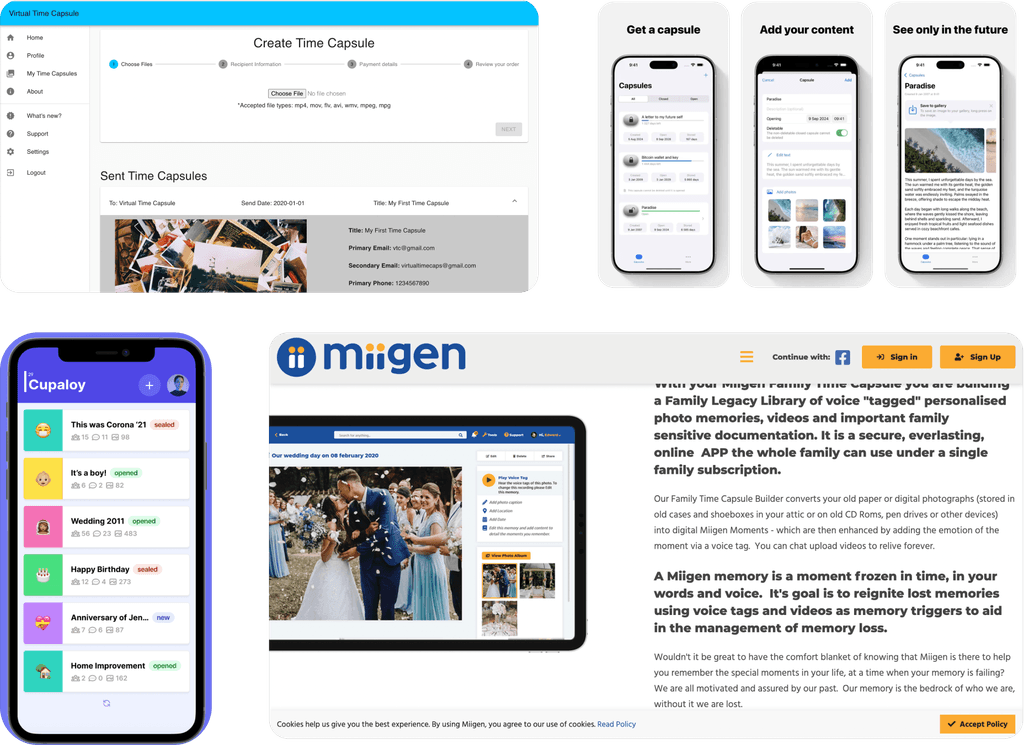
Existing digital time capsule apps focus on function over social, playful, and shareable experiences.
They target a broader, older audience and often lack visually engaging design tailored for young users seeking fun social experiences.
Existing competitors
With our app concept and research locked in, I jumped into designing the experience.
Core app flows
The goal was to craft an experience where collaboration, play, and personalization are built into every interaction.
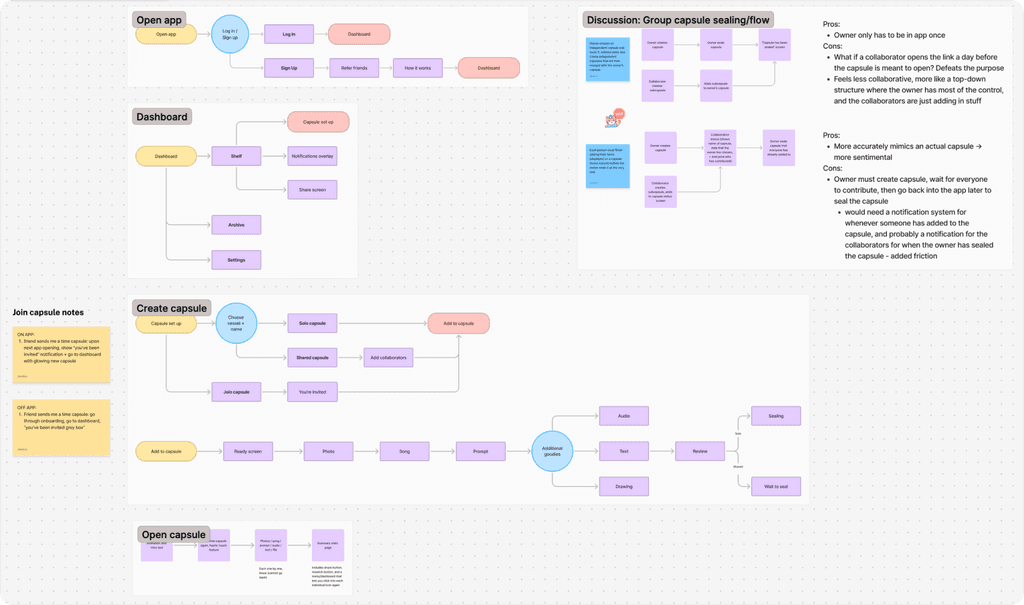
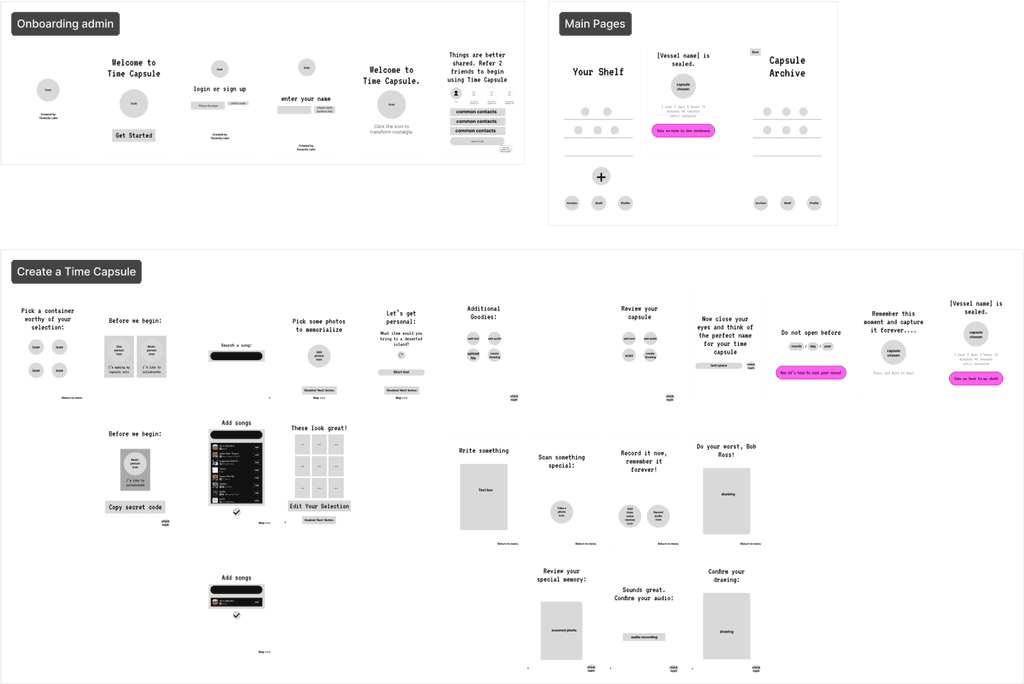
I started by mapping out the interaction design and wireframing.
User flows
Wireframes
Creating a capsule
Creating a capsule needed to feel flexible and intuitive. Users should be able to add, edit, and organize any kind of memory with ease.
I began by designing in a simple linear flow, refining each screen as I received feedback.
Initial capsule creation flow and screens
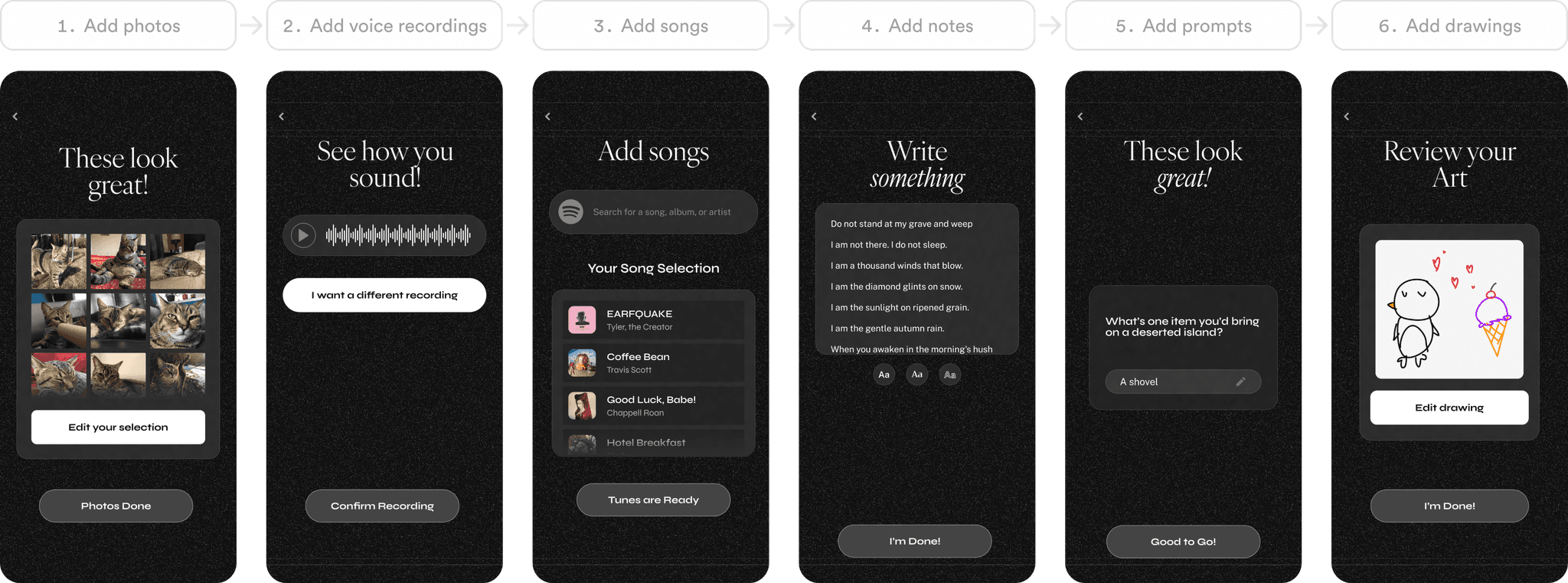
I recieved two main pieces of feedback from testers:
I designed the option to add several photos, but for the other media types, I assumed that the user could only add 1. But this doesn’t make sense, and doesn’t reflect a real-world time capsule.
Key Finding
Users want to include multiple pieces of any media type, not just photos and songs.
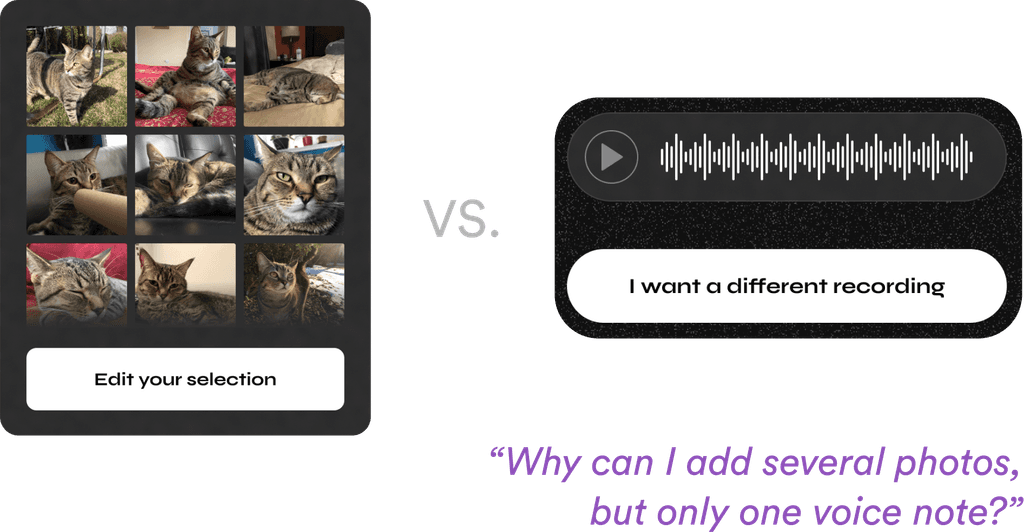
Each item functions slightly differently with how they’re collected and stored. My initial iterations for the adding of each item was pretty inconsistent.
Solution
I landed on a single solution to address multiple design inconsistencies and user frustrations: carousels.
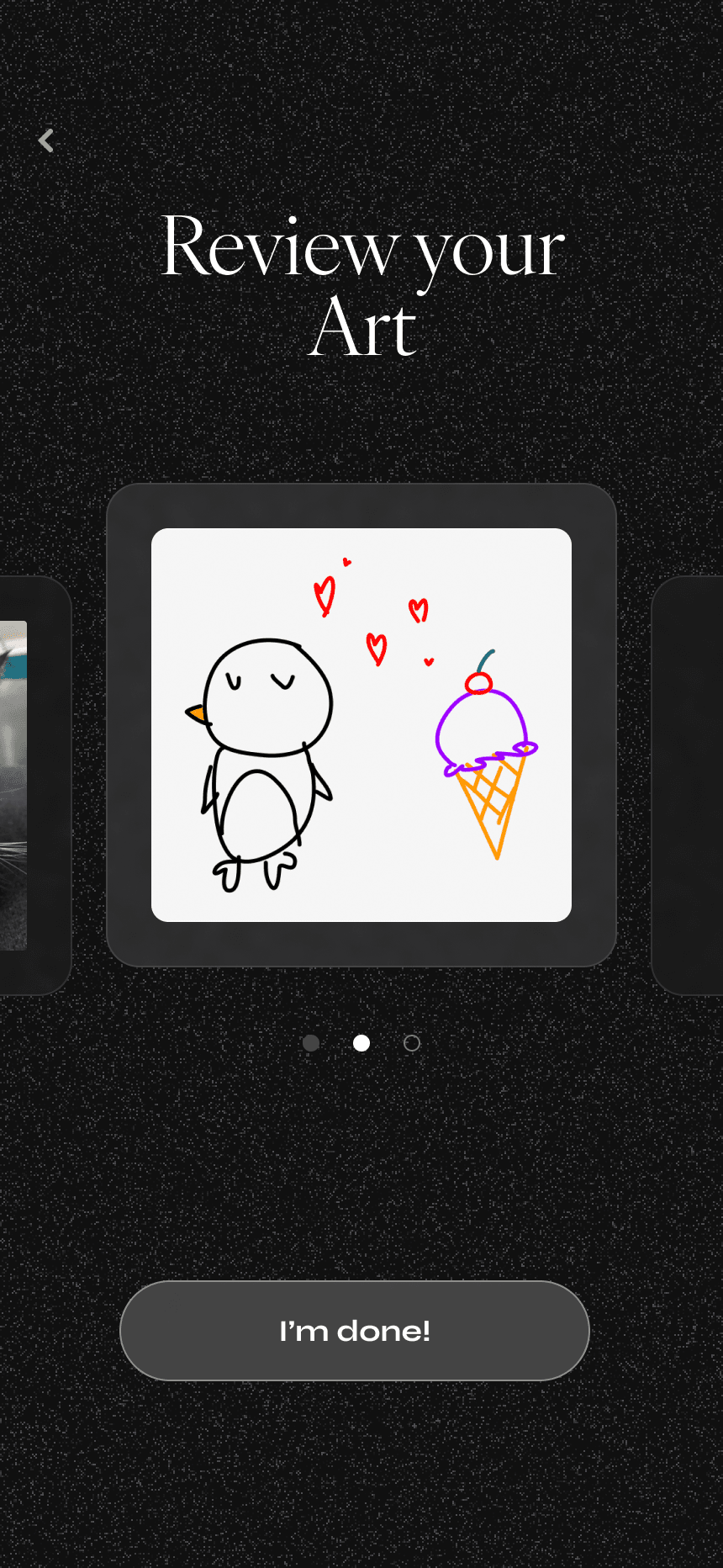
At every stage of the capsule creation, each media item would be added to a carousel. Users can add several items to a carousel, and delete existing carousel items. The carousel solution also reduced the complexity of managing existing uploaded media: users could easily view, edit, delete, or rearrange items within a consistent interface.
Consolidated capsule creation flow, with carousels
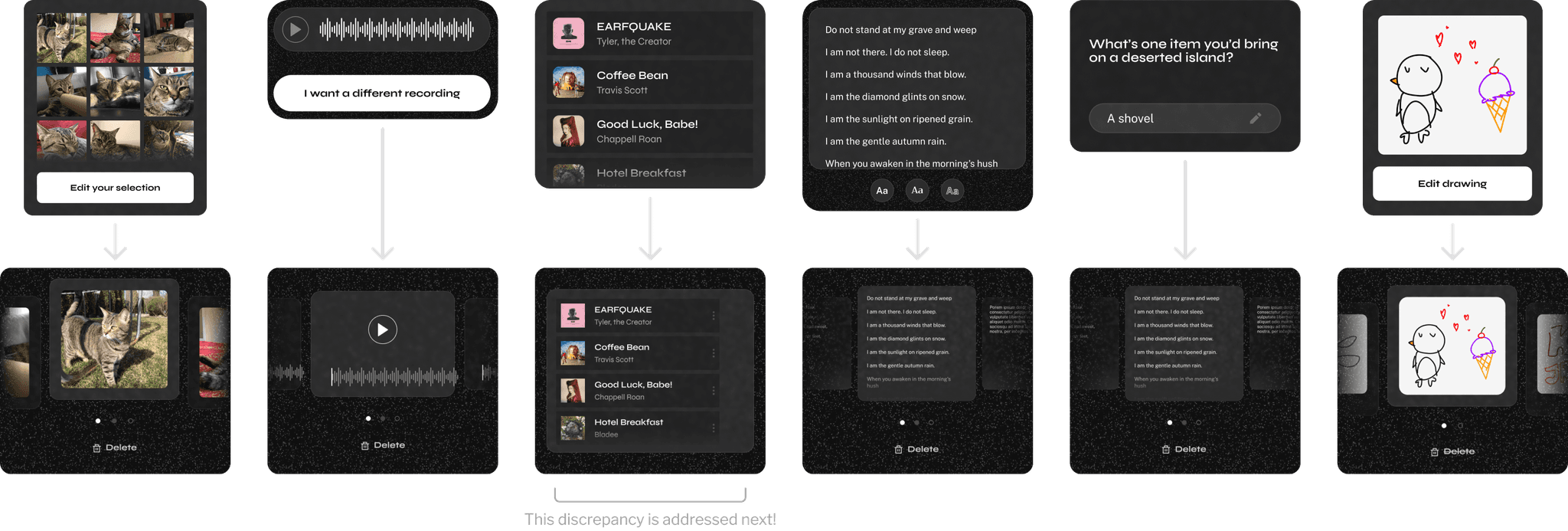
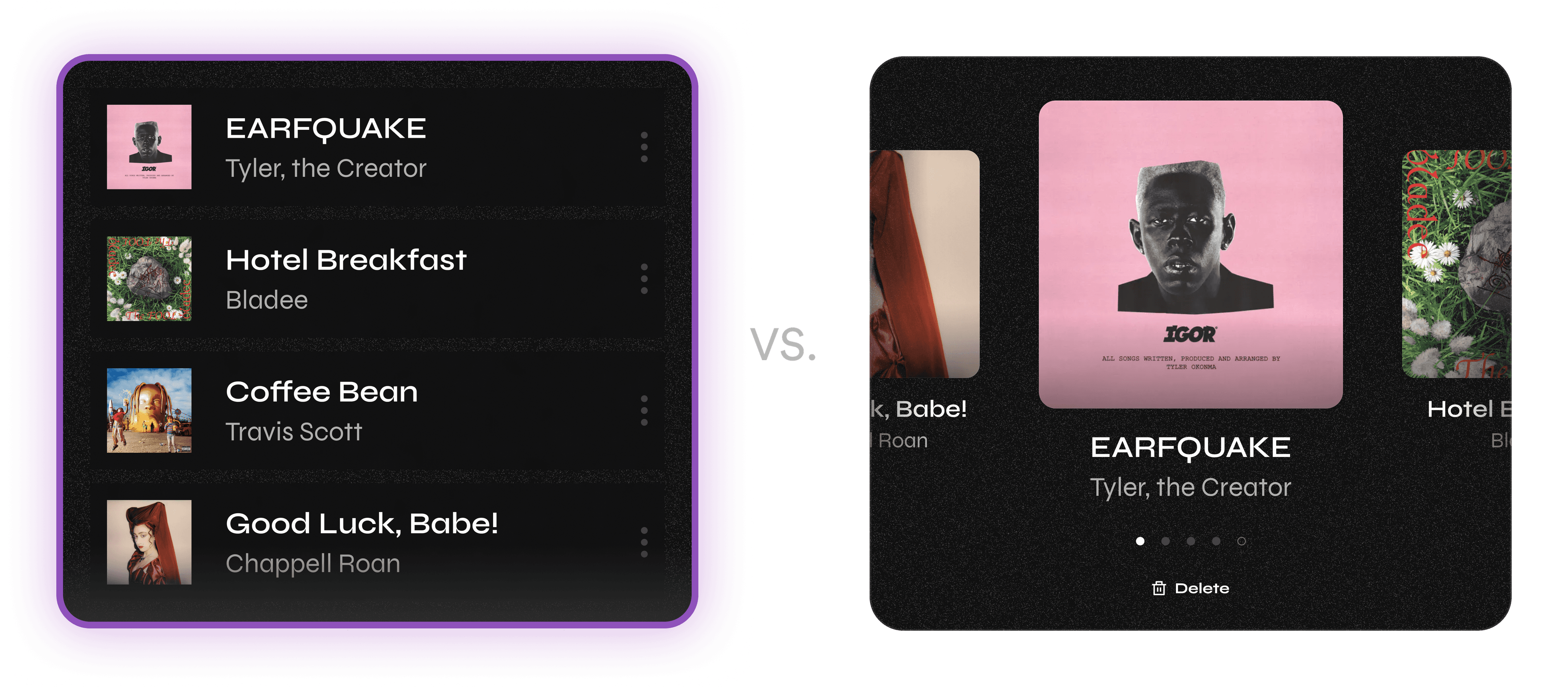
I made one exception to the carousel layout for the song media type.
During user testing, participants said that while the carousel worked well for other media, it didn’t capture the overall "feeling" of a group of songs together. They wanted to see multiple tracks together, similar to how playlists feel. Based on this insight, I used a list view for songs instead of the carousel.
Songs: list vs. carousel view comparison
collaboration User Flow
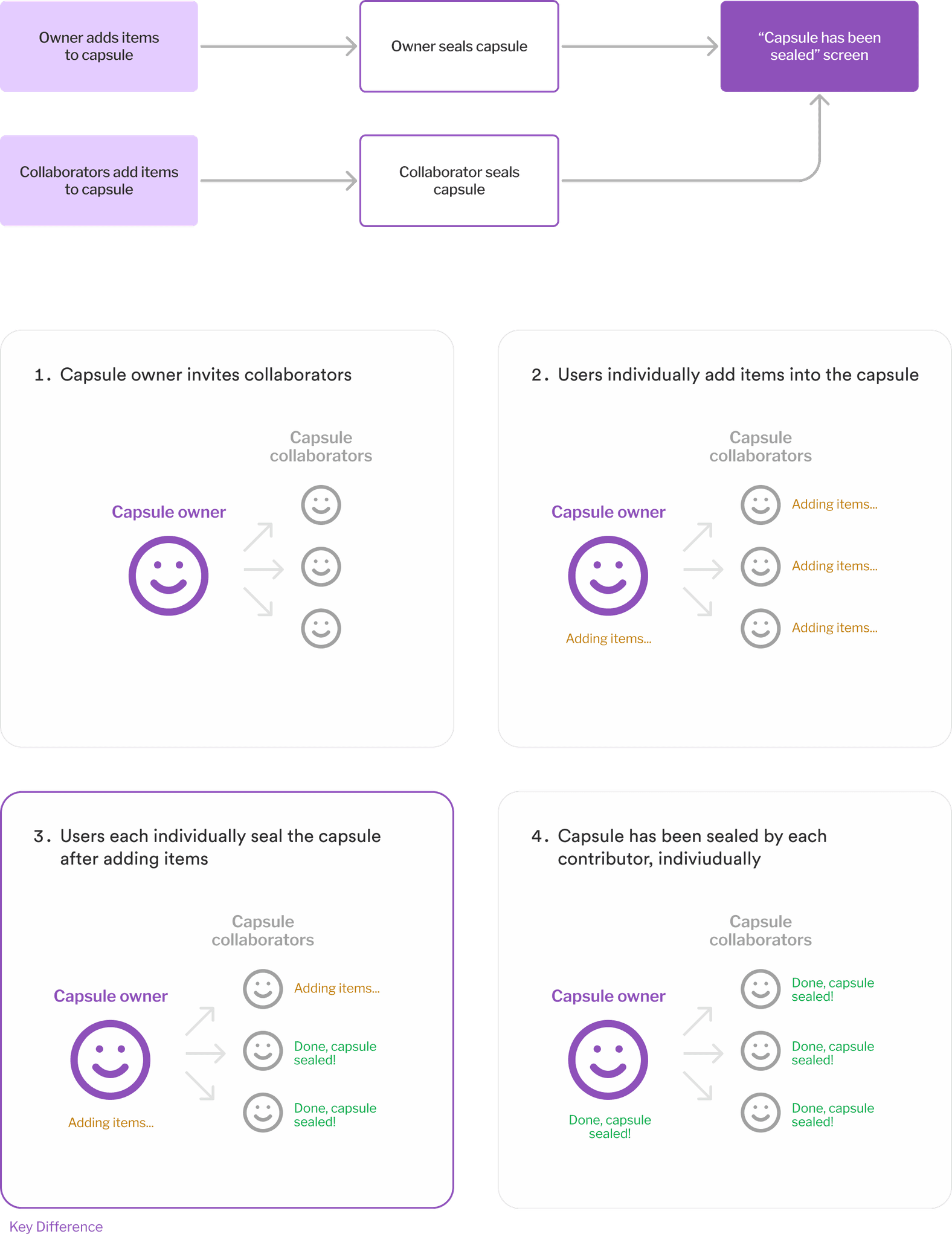
When exploring how collaboration should work for a shared time capsule, I identified two main user flow variations.
While both flows follow the same general process of adding items and sealing the capsule, they differ in who controls the final capsule sealing — either each contributor individually, or the owner on behalf of everyone. This distinction affects how ownership and coordination are experienced by collaborators.
Flow 1: Individual sealing
Flow 2: Only owner seals
Everyone individually seals the capsule when they're done adding items
Flow 1: Individual sealing
Flow 2: Only owner seals
Everyone individually seals the capsule when they're done adding items
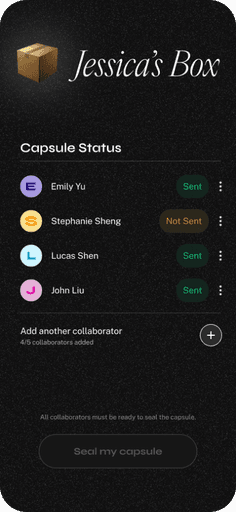
We chose the second flow, which includes the collaboration status screen, for a few key reasons:
It fosters a stronger sense of community. Everyone contributes to the same capsule, and waiting for others to finish enhances the shared experience. It makes the final sealing moment feel more collective and meaningful.
It more closely mirrors a real-life time capsule, where everyone adds their items before one person seals it, reinforcing the idea of a shared, one-time event.
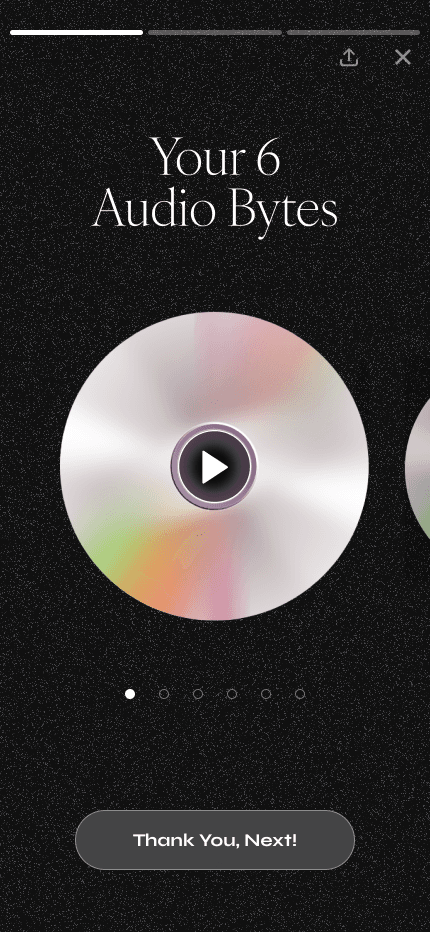
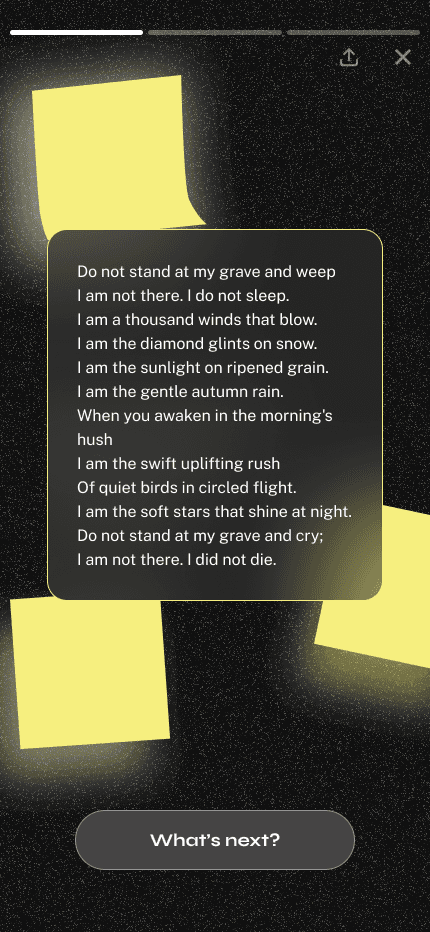
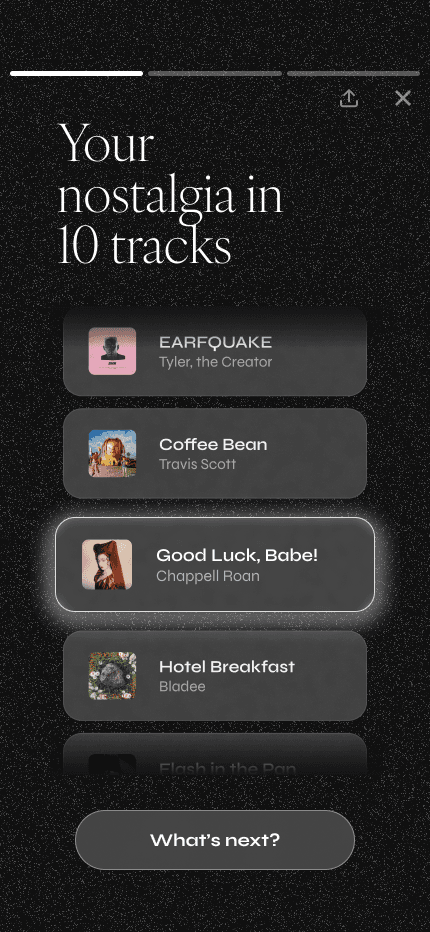
The Final Product
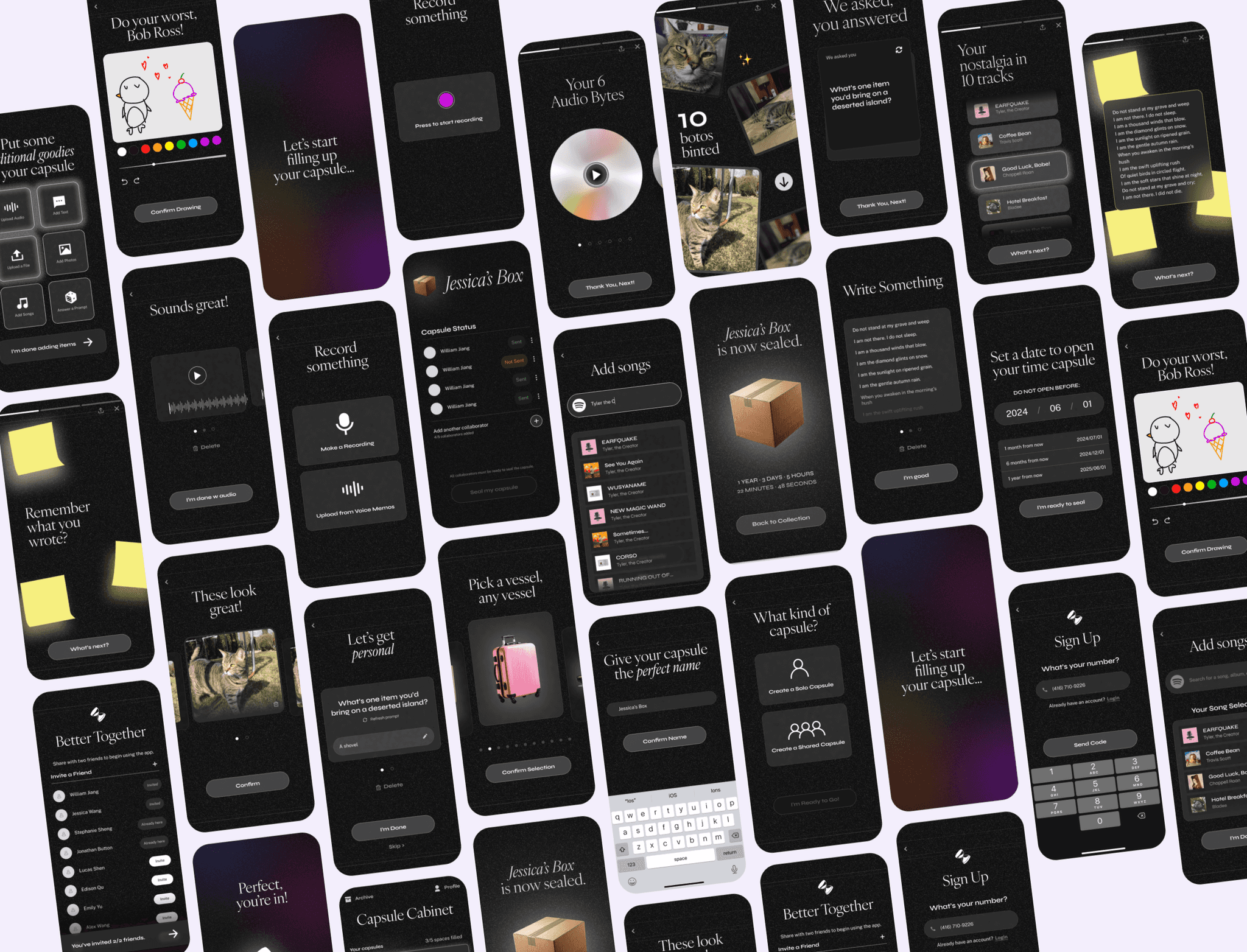
Capture and share memories with friends. Relive them in Retrospect.
Sign Up + Onboarding

Home Screens
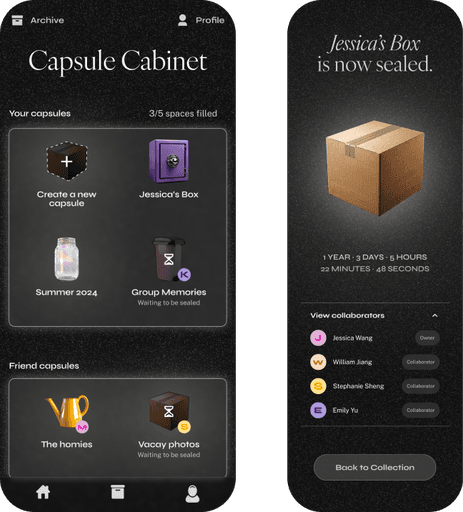
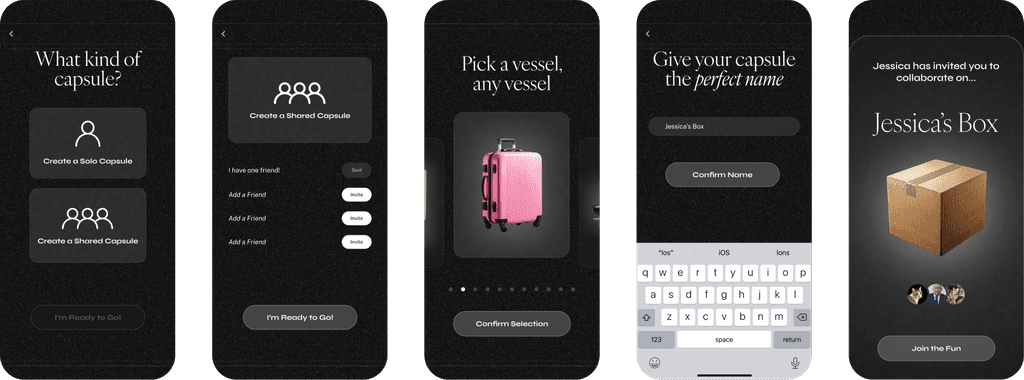
Creating a Capsule
Set up
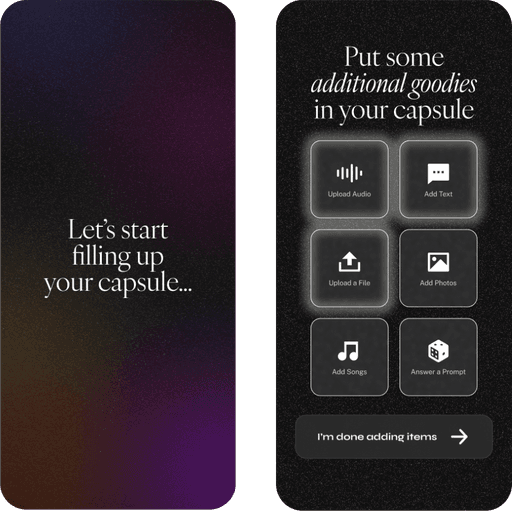
Adding media
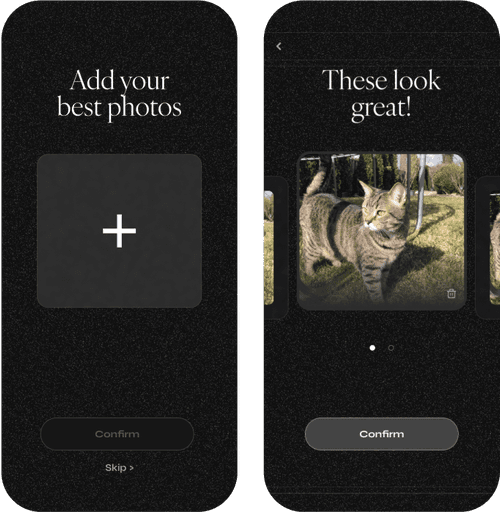
Photos
Notes
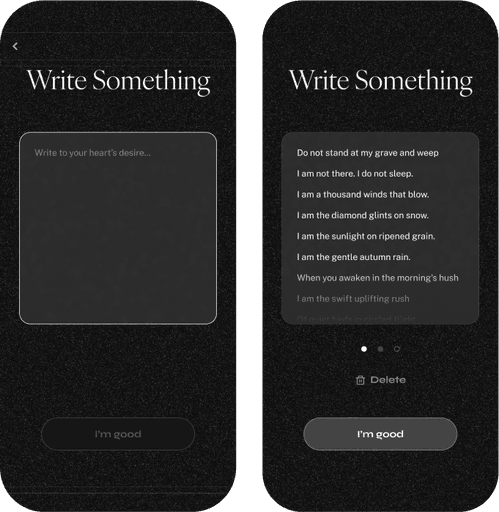
Flashcard prompts

Songs
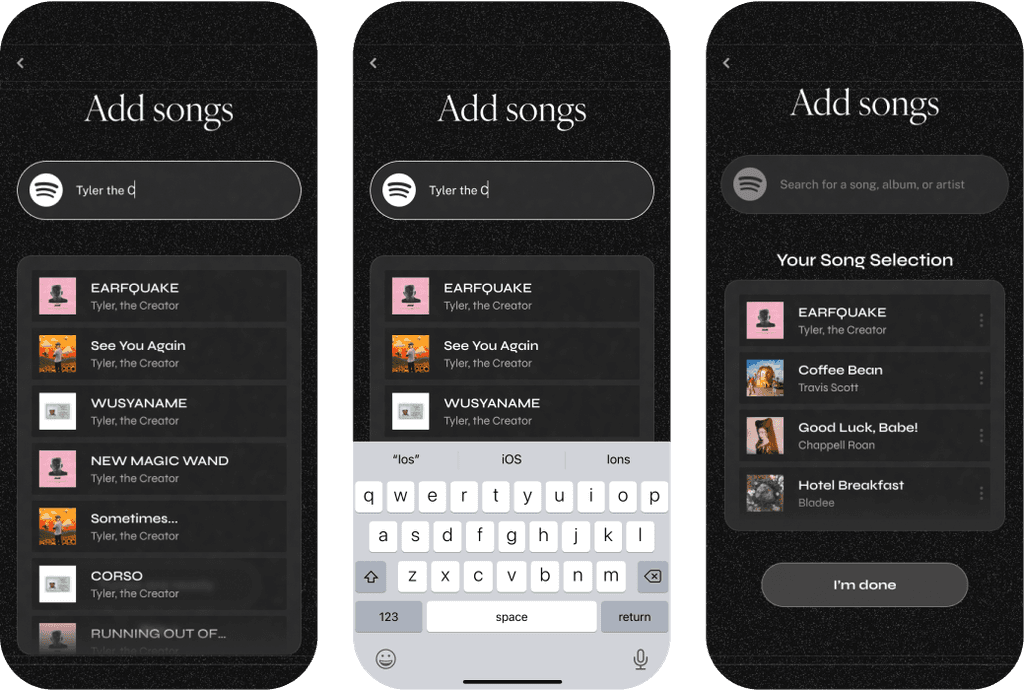
Audio bytes


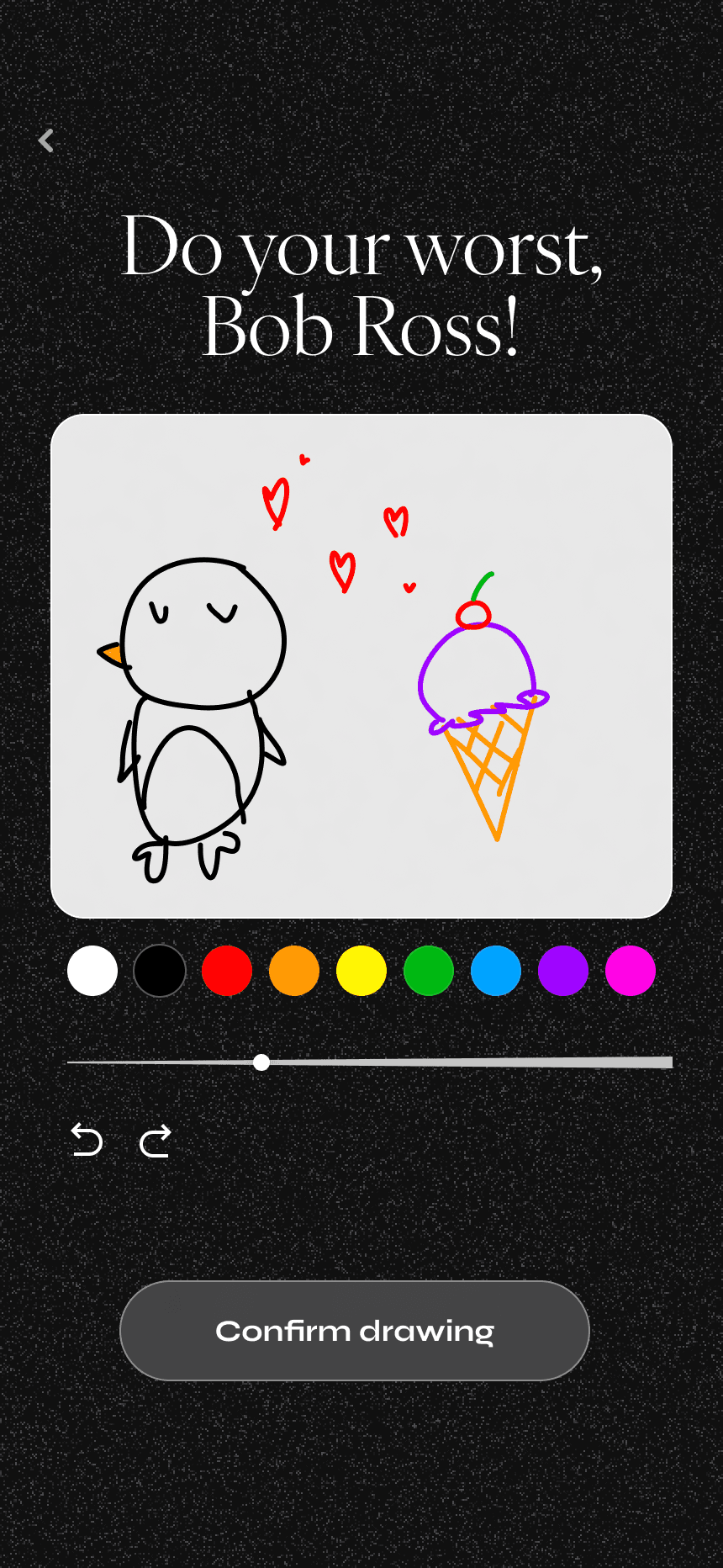
Drawings

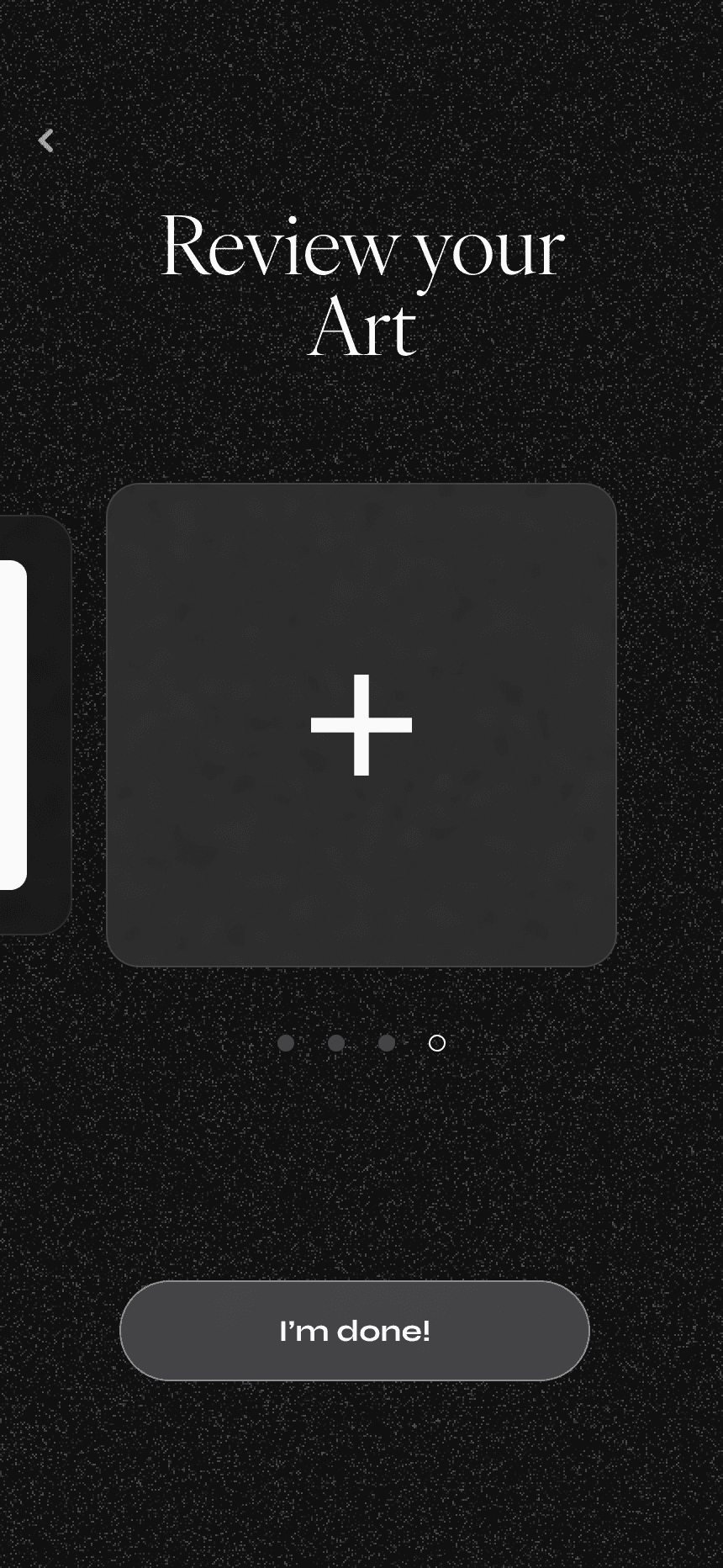
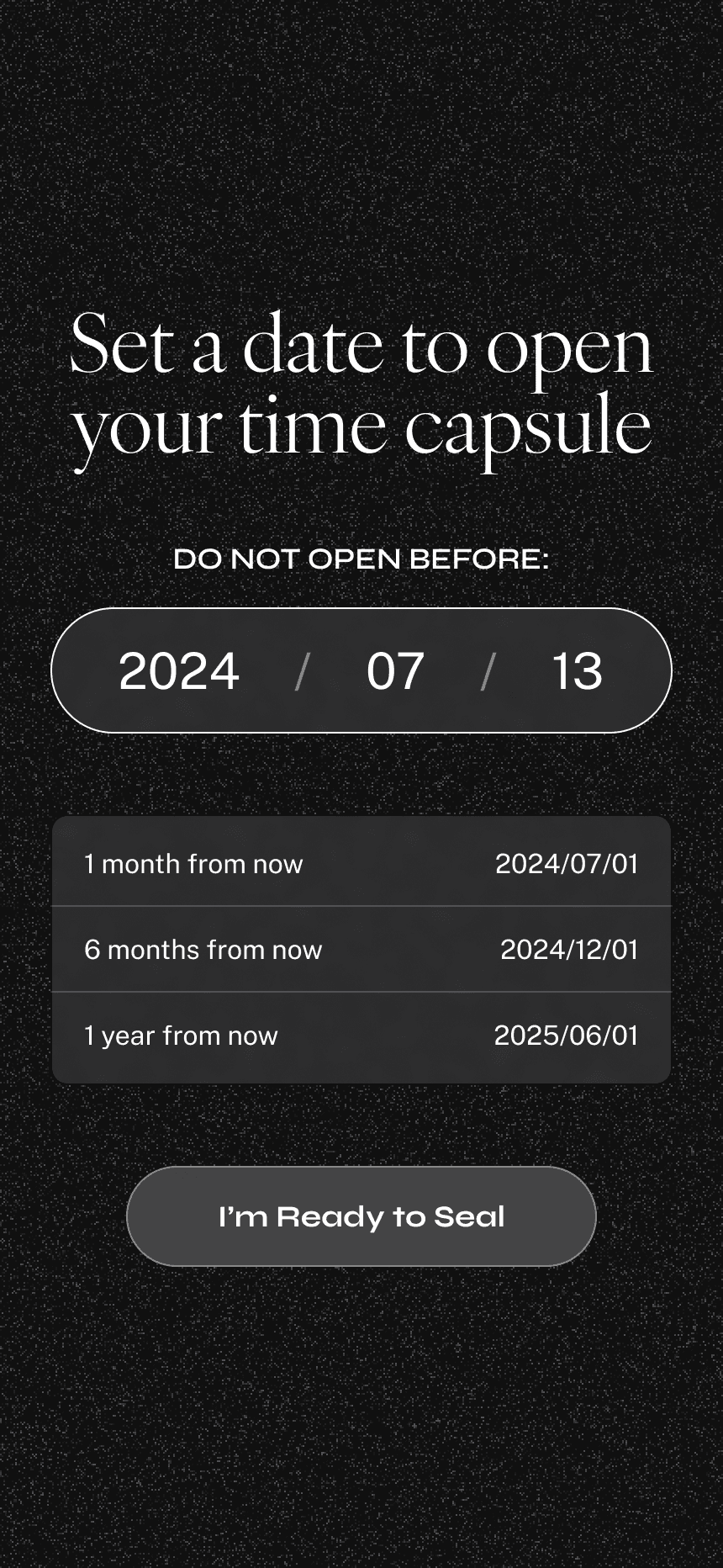
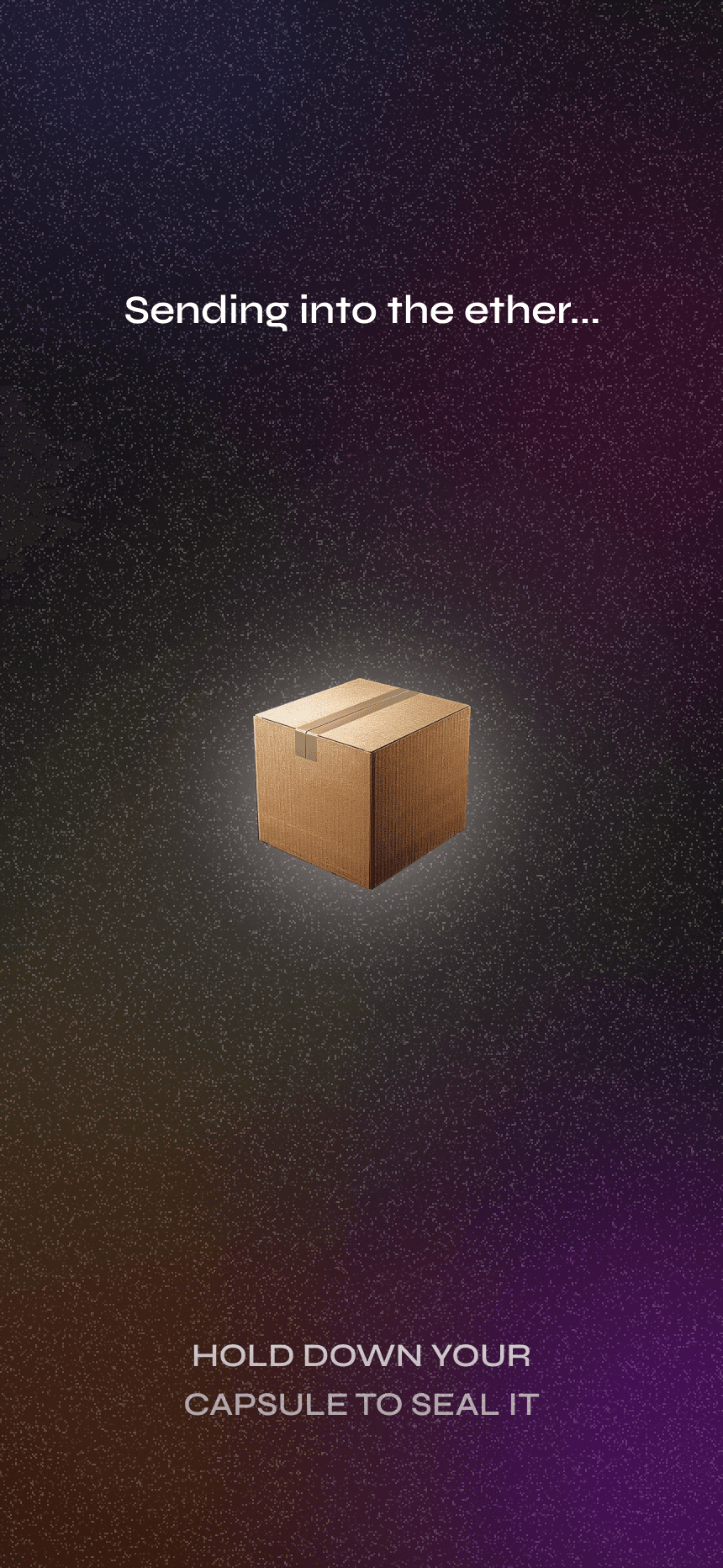
Sealing the capsule


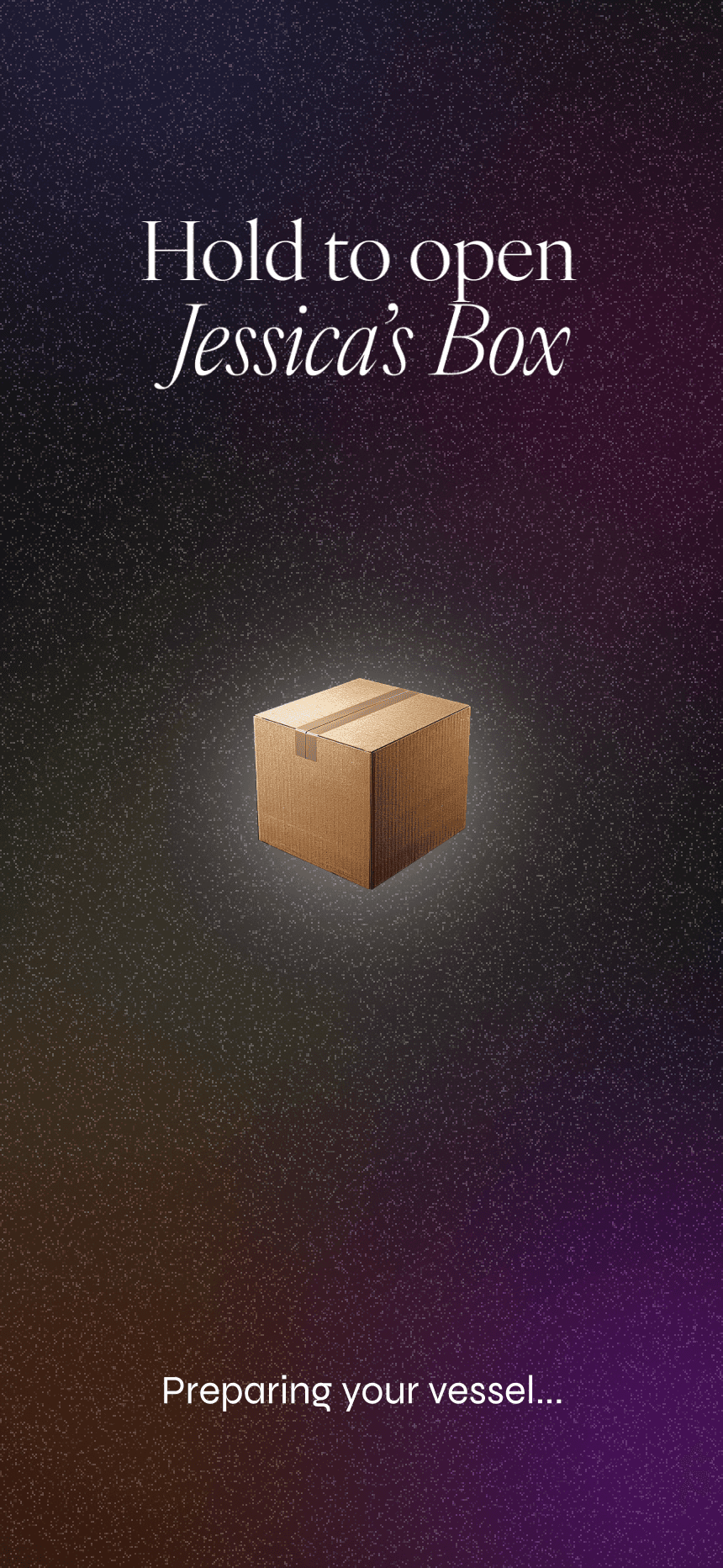
Opening a Capsule
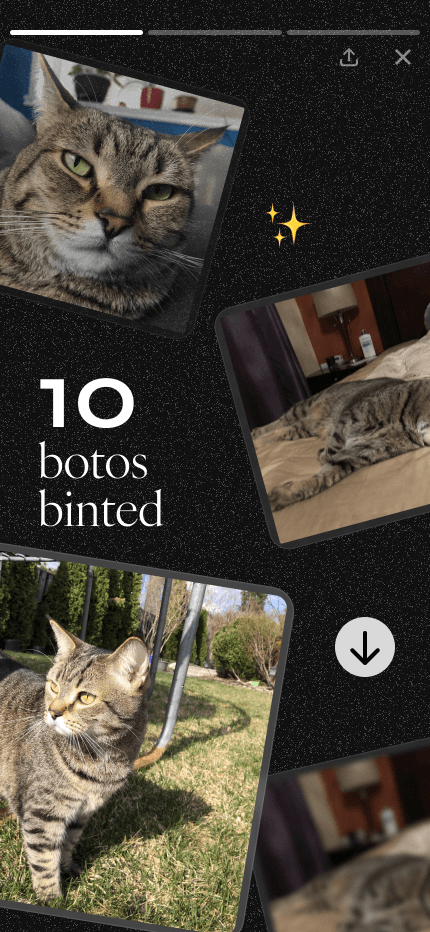



It's done! What did I learn?
MVPs (minimum viable products) are the MVP (most valuable player)
My team fell victim to scope creep. From the get-go we added collaboration, sharing, and a fancy onboarding, and we tried to build it all at once. I learned how important it is to start with the simplest possible version of the product, get it in front of users early, and iterate based on real feedback (not assumptions).